
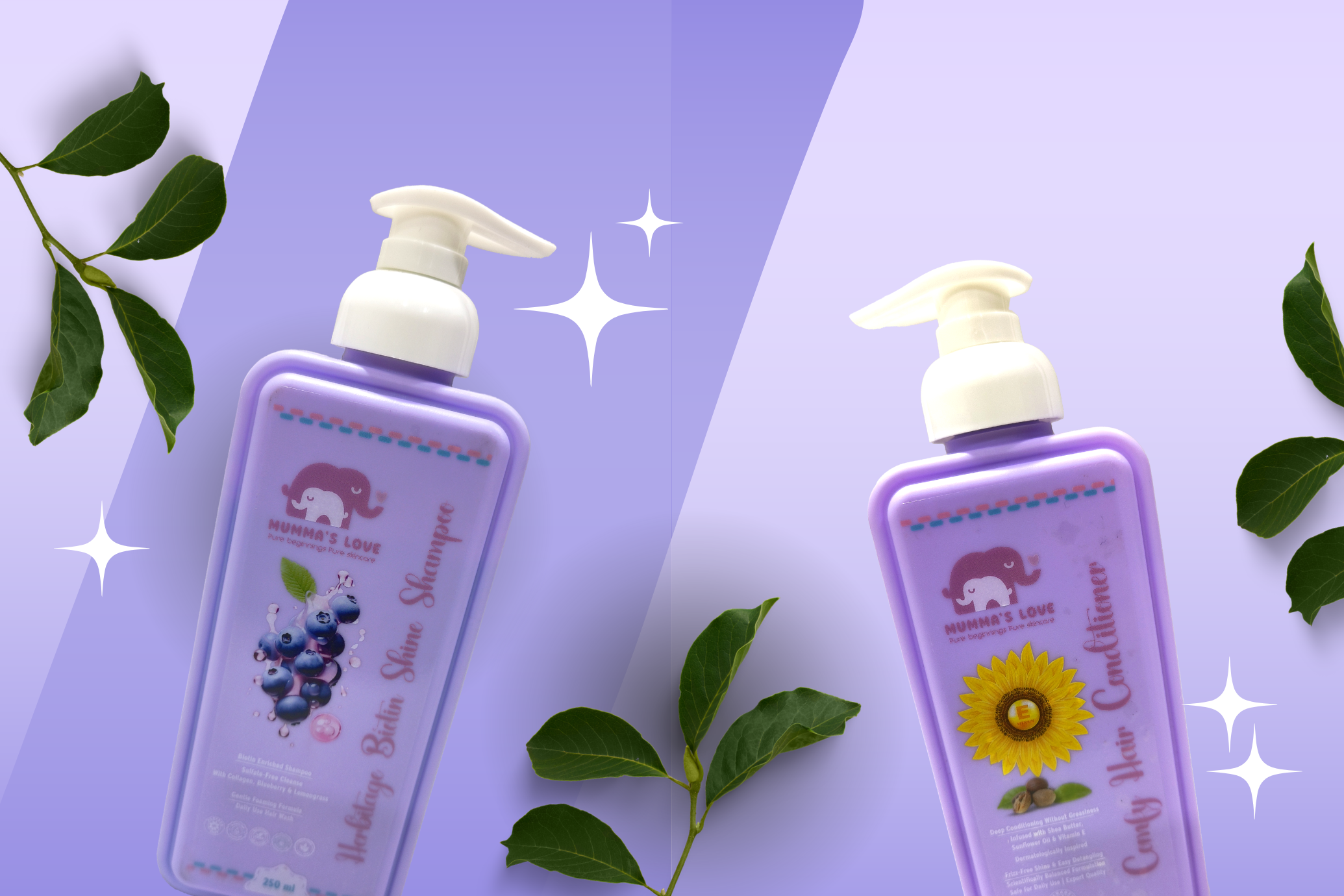
In the consumer skincare market, the term ‘chemical-free’ is scientifically illiterate—even water is a chemical. When Mumma’s Love commits to ‘Zero Harsh Chemicals,’ we are making a precise, medically defined promise: the absolute exclusion of compounds known to disrupt endocrine function, degrade the epidermal barrier, or trigger immunogenic responses. To understand our formulation philosophy, one must understand the exact biochemical damage caused by the industry’s most ubiquitous, yet hazardous, ingredients. The first category of offenders are harsh anionic surfactants, most notably Sodium Lauryl Sulfate (SLS) and Sodium Laureth Sulfate (SLES).
Surfactants are the cleansing agents responsible for foaming and removing dirt. SLS is a highly effective, extremely cheap degreaser. However, its molecular structure allows it to deeply penetrate the infant stratum corneum. Once inside, SLS rapidly denatures structural proteins (keratins) and solubilizes the essential intercellular lipids (ceramides, cholesterol, and free fatty acids) that hold the skin together. By stripping these lipids, SLS fundamentally compromises the barrier, leading to a drastic increase in Transepidermal Water Loss (TEWL). Clinical patch tests repeatedly demonstrate that SLS induces acute irritant contact dermatitis, characterized by erythema (redness), scaling, and pruritus (itching).
SLES, while slightly milder due to the process of ethoxylation, carries a different, hidden risk. The ethoxylation process frequently results in contamination with 1,4-dioxane, a known probable human carcinogen. Because a newborn’s skin is 30% thinner and highly permeable, repeated exposure to trace contaminants over large surface areas represents an unacceptable toxicological risk. At Mumma’s Love, we outright ban all sulfate-based detergents.
Instead, we utilize advanced, ultra-mild amphoteric and non-ionic surfactants, such as Coco-Glucoside and Sodium Cocoyl Isethionate. These molecules have a much larger molecular weight, meaning they cannot physically penetrate the infant epidermis. They form larger micelles that gently lift soil and sebum from the surface of the skin without disrupting the underlying lipid matrix. This allows for effective cleansing that maintains complete structural integrity.
Preservation is essential in skincare to prevent catastrophic microbial overgrowth, but the choice of preservative is a matter of profound medical consequence. For decades, Parabens (methylparaben, propylparaben, butylparaben) have been the industry standard due to their broad-spectrum efficacy and low cost. However, parabens possess a chemical structure that closely mimics human estrogen. When absorbed through the highly permeable skin of an infant, they can bind to estrogen receptors, causing endocrine disruption.
The developing endocrine system of a neonate is exquisitely sensitive to exogenous hormonal signals. Even trace amounts of xenoestrogens (foreign estrogens) can interfere with normal developmental pathways. While regulatory bodies argue about safe threshold limits for adults, pediatric toxicologists emphasize that infants, given their high body-surface-area-to-mass ratio, face a disproportionately high systemic load. At Mumma’s Love, the potential for long-term hormonal interference is a risk we simply will not take; we are strictly paraben-free.
Similarly hazardous are Phthalates, a class of plasticizing chemicals often hidden in ingredient lists under the umbrella term ‘fragrance’ or ‘parfum.’ Phthalates are used as fixatives to make scents last longer. In the body, they act as powerful anti-androgens and have been linked to reproductive anomalies and neurodevelopmental delays in extensive pediatric studies. Because the FDA does not require companies to disclose the individual chemical components of a proprietary ‘fragrance’ blend, phthalates are effectively invisible on most labels.
This is why Mumma’s Love adheres to a policy of zero synthetic fragrances. If a product has a scent, it is derived purely from hypoallergenic, medical-grade botanical isolates that have been strictly quantified to ensure zero phthalate contamination and zero volatile allergen presence. Our transparency means that every single molecule in our bottle is safe, necessary, and fully disclosed.
Aesthetics often drive consumer purchases, leading companies to dye baby washes pastel pink or baby blue. These synthetic dyes (often labeled as FD&C colors or CI numbers) serve absolutely no functional purpose for the skin. Biologically, they are complex, synthetic aromatic hydrocarbons, many derived from coal tar. These dyes are recognized contact allergens and can trigger hypersensitivity reactions in neonates. Furthermore, some azo dyes are known to metabolize into aromatic amines, which are genotoxic.
Another insidious class of chemicals commonly found in baby wipes and lotions are Formaldehyde-releasing preservatives (FRPs), such as DMDM hydantoin, Quaternium-15, and Diazolidinyl urea. Rather than containing formaldehyde directly, these chemicals slowly decompose over the shelf life of the product, continuously releasing low levels of formaldehyde gas to kill bacteria. Formaldehyde is a potent sensitizer and a Group 1 human carcinogen (IARC).
In the warm, humid environment of a diaper, the release of formaldehyde from a baby wipe can rapidly trigger severe allergic contact dermatitis, often misdiagnosed as standard diaper rash. The continued application of the FRP-containing product only worsens the immunological response. The Mumma’s Love safety standard categorically excludes all FRPs, relying instead on modern, universally accepted, food-grade preservation systems that stabilize the formula without releasing toxic degradation byproducts. We formulate for physiological harmony, ensuring that zero harsh chemicals ever touch your child.