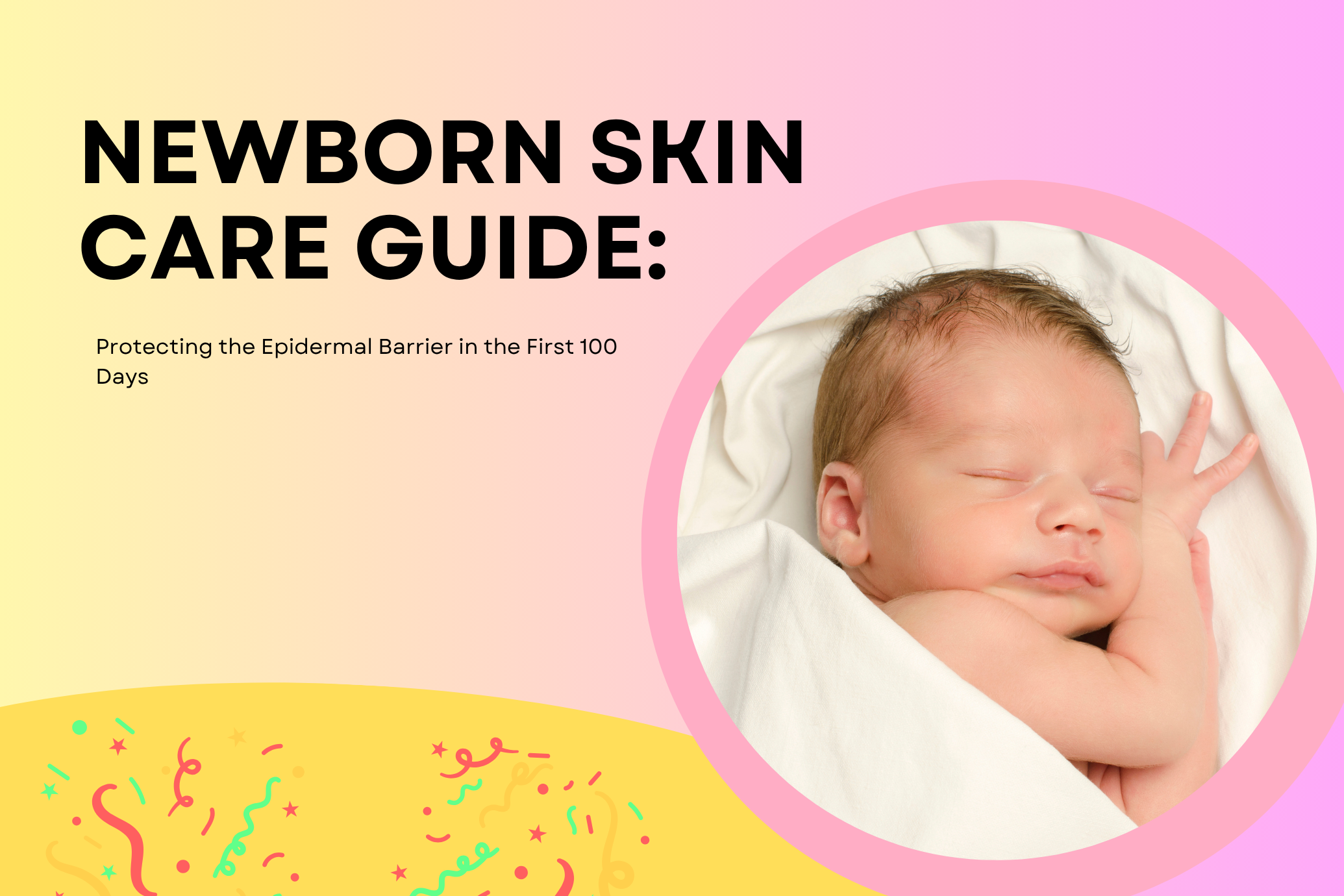
Newborn Skin Care Guide: Protecting the Epidermal Barrier in the First 100 Days
The Biology of Neonatal Skin Adaptation
The transition from an aqueous, sterile intrauterine environment to the dry, microbe-rich outside world is one of the most profound biological shifts a human will ever experience. For the first nine months, a fetus is enveloped in amniotic fluid and protected by the vernix caseosa—a thick, lipid-rich biofilm that waterproofs the skin. Upon birth, this environment vanishes, and the infant’s skin must rapidly adapt to function as a terrestrial barrier. The first 100 days of life are critical; during this window, the epidermis is highly vulnerable, structurally immature, and prone to rapid moisture loss.Anatomically, neonatal skin differs drastically from adult skin. The stratum corneum (the outermost layer of the epidermis) is significantly thinner, and the corneocytes (skin cells) are smaller and less tightly packed. The lipid bilayer—the mortar that holds the cellular bricks together—is less dense. This structural immaturity leads to a phenomenon known as Transepidermal Water Loss (TEWL). Newborns lose water through their skin at a much higher rate than adults, making them highly susceptible to clinical dryness, micro-fissures, and desquamation (peeling).Furthermore, the newborn immune system is still developing its tolerance mechanisms. Because the epidermal barrier is highly permeable, topical molecules that would normally sit on the surface of adult skin can easily penetrate the infant stratum corneum. If these molecules are irritants, synthetic fragrances, or harsh preservatives, they can trigger systemic immune responses or localized inflammatory cascades. Therefore, neonatal skincare is not about aesthetic enhancement; it is a fundamental pillar of preventative medicine and barrier protection.During these crucial first three months, the guiding principle of pediatric dermatology is ‘minimalist intervention.’ Every product introduced to the infant’s skin must serve a specific biological purpose: cleansing without stripping, hydrating, or providing an occlusive barrier against physical irritants. At Mumma’s Love, we formulate our newborn line specifically to mimic the protective qualities of the vernix caseosa, utilizing biocompatible lipids that support this critical adaptation phase.
Mastering the Neonatal Bathing Protocol
One of the most common mistakes new parents make is over-bathing. While a daily bath is deeply ingrained in adult hygiene routines, it is actively detrimental to a newborn’s skin barrier. Frequent exposure to water—especially hard tap water, which contains calcium and magnesium ions—can disrupt the delicate acid mantle and exacerbate TEWL. For the first 100 days, pediatricians recommend bathing a newborn no more than two to three times a week, utilizing ‘sponge baths’ for the diaper area and skin folds in between.When a full bath is necessary, the choice of cleanser is paramount. Traditional soaps are strictly contraindicated for neonates. Saponified soaps possess an alkaline pH (usually between 9 and 10), which neutralizes the skin’s natural acidity, causing the corneocytes to swell and the lipid barrier to dissolve. This leaves the skin tight, dry, and vulnerable to bacterial colonization. Instead, a soap-free, pH-balanced Syndet (synthetic detergent) cleanser must be used. Syndets are formulated to match the skin’s ideal pH of 5.5, ensuring that cleansing occurs through micellar action without structural disruption.Water temperature also plays a critical role in barrier preservation. The bath water should be strictly lukewarm, ideally around 37°C (98.6°F). Hot water accelerates the extraction of natural moisturizing factors (NMFs) from the epidermis, compounding the dryness issue. The duration of the bath should be kept under 10 minutes to minimize water logging of the stratum corneum.Immediately post-bath, the ‘soak and seal’ method must be employed. Within three minutes of gently patting the infant dry (never rubbing), a liberal layer of a ceramide-rich, hypoallergenic emollient must be applied. This traps the ambient moisture absorbed during the bath, sealing it beneath an occlusive lipid layer, effectively halving the rate of transepidermal water loss overnight.
Targeted Protection for Vulnerable Zones
Not all neonatal skin requires the same approach. Certain anatomical zones are subjected to unique environmental stressors and demand specialized care. The diaper area, for instance, is the most hostile environment on a baby’s body. It is subjected to high humidity, constant friction, and the highly corrosive enzymes found in fecal matter and urine. When urine breaks down, it releases ammonia, rapidly driving up the local skin pH and activating fecal proteases and lipases that literally digest the epidermal barrier.To combat this, proactive barrier application is essential from day one. A medical-grade diaper cream utilizing Zinc Oxide provides a physical, impermeable shield. Zinc Oxide is unique because it is astringent, antimicrobial, and sits atop the stratum corneum without being absorbed. It ensures that caustic waste never makes contact with the fragile skin beneath. At Mumma’s Love, our Soothique Rash Cream is designed specifically for this prophylactic use, keeping the diaper zone perfectly insulated.Another area of concern is the scalp, frequently afflicted by Seborrheic Dermatitis, commonly known as cradle cap. This presents as thick, yellowish, sebaceous crusts. It is not caused by poor hygiene, but rather by maternal androgens passed placentally, which hyper-stimulate the infant’s sebaceous glands, coupled with a localized overgrowth of Malassezia yeast. Parents must resist the urge to vigorously scrub or pick at these scales, which can cause micro-tears and secondary bacterial infections.Management requires a gentle, keratolytic approach. A specialized newborn shampoo that contains mild, non-irritating exfoliants can help soften the plaques. Massaging the scalp with a pure, non-comedogenic botanical oil prior to the bath can help loosen the crusts safely. The first 100 days are a delicate dance of protection and support, and with Mumma’s Love, you are equipped with the clinical formulations necessary to navigate it flawlessly.
Frequently Asked Questions About Newborn Skin Care
How often should I bathe my newborn?
Newborns do not need daily baths. 2–3 times per week is sufficient during the first month. Over-bathing strips the still-developing skin barrier of its natural lipids, increasing transepidermal water loss. Sponge baths are recommended until the umbilical cord stump falls off.
What ingredients should I avoid in baby skincare products?
Avoid mineral oil, synthetic fragrances, parabens, SLS/SLES sulfates, and undiluted essential oils. These are documented irritants for neonatal skin. Always choose products that disclose their full ingredient list.
When can I start using lotion on my newborn?
You can start using a gentle, mineral oil-free lotion from the first week if the skin appears dry. Apply after bathing while skin is slightly damp. Our Little Blossom Baby Lotion is formulated for this — Shea Butter and Aloe Vera without occlusive mineral oil.
Is “natural” baby skincare always safer?
No. Many natural ingredients — essential oils, citrus extracts — are documented contact allergens for neonatal skin. Safety comes from clinical evaluation, not origin. A doctor-formulated product can be significantly safer than an all-natural product with untested botanicals.
How do I know if my baby has a skin reaction?
Signs include redness, hives, excessive dryness, or persistent crying during product application. Always perform a patch test on the inner wrist first. Discontinue immediately if any reaction occurs and consult your paediatrician.
—
Ready to start with clinically safe baby skincare? Explore our doctor-formulated range: Little Blossom Baby Lotion, Cuddle Bloom Baby Shampoo, and Soothique Rash Cream.