
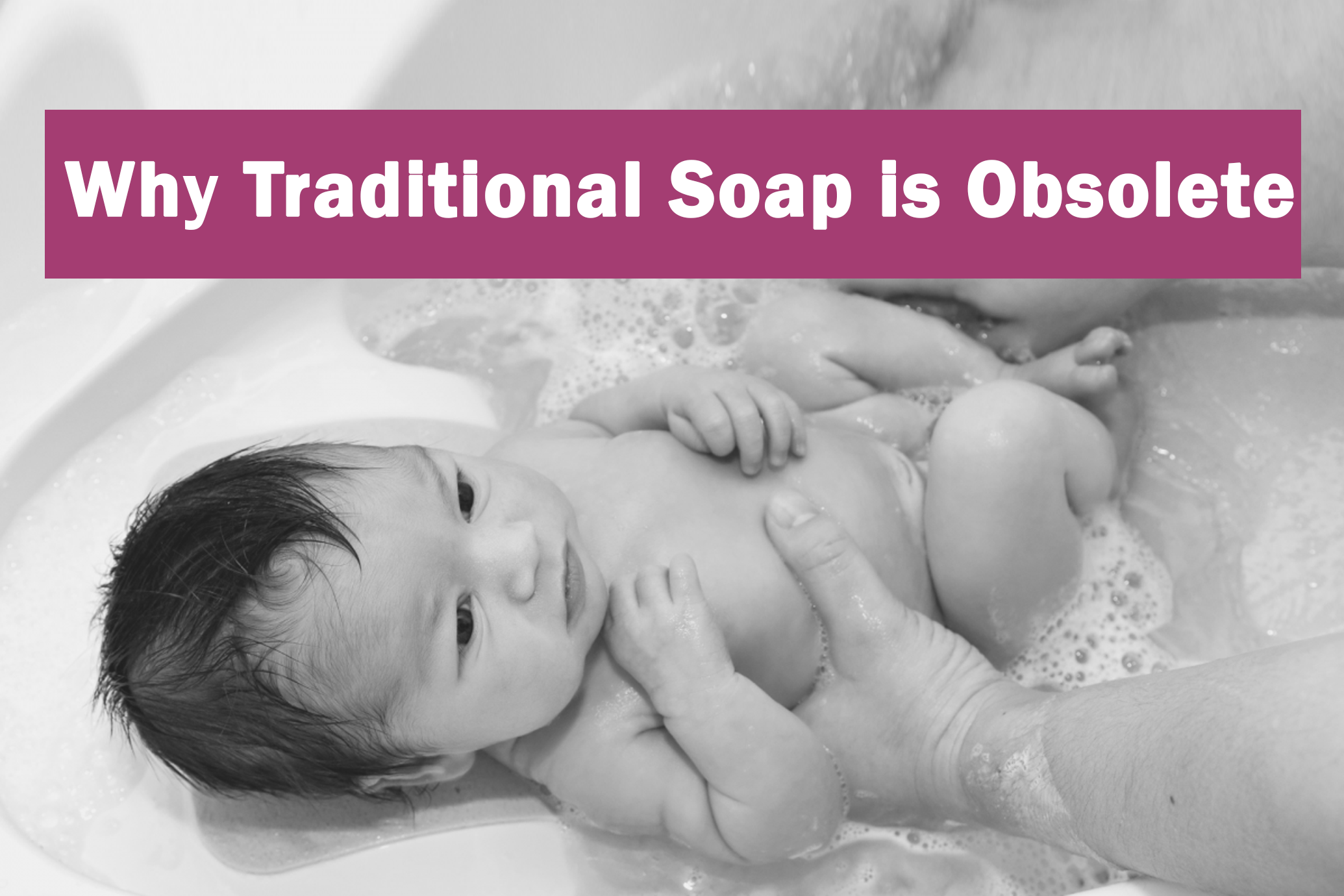
For centuries, human hygiene has been dominated by a single chemical reaction: saponification. Traditional soap is created by mixing a strong alkali (like sodium hydroxide or lye) with a fat or oil (triglycerides). The resulting alkaline salts of fatty acids are highly effective at breaking down dirt and grease. However, when viewed through the modern lens of dermatological science, applying traditional soap to the human epidermis—and especially to a newborn’s fragile skin—is a biologically destructive act. To understand why pediatricians mandate the use of Syndet bars, we must first dissect the chemical violence of traditional soap.
The primary issue lies in pH. The pH scale measures how acidic or alkaline a substance is, ranging from 0 to 14. Healthy human skin is inherently acidic, possessing an ‘acid mantle’ with a pH typically hovering between 4.5 and 5.5. This acidity is a crucial physiological barrier. It optimizes the function of structural proteins (keratins), controls the desquamation (shedding) process, and most importantly, it creates a hostile environment for pathogenic bacteria like Staphylococcus aureus, while supporting the healthy commensal microbiome.
Traditional soaps, by their very chemical nature, are fiercely alkaline, possessing a pH between 9.0 and 11.0. When you wash an infant with traditional soap, you immediately and forcefully neutralize the acid mantle. This alkaline shift causes the corneocytes (surface skin cells) to swell and physically separate. The high pH paralyzes the epidermal enzymes responsible for synthesizing barrier lipids, meaning the skin cannot repair itself. The immediate clinical result is acute dryness, tightness, and an exponential increase in Transepidermal Water Loss (TEWL). Over time, this chronic barrier disruption leads to atopic dermatitis (eczema), heightened allergic sensitization, and a vast increase in susceptibility to bacterial infections.
Furthermore, traditional soaps interact with the calcium and magnesium ions present in hard tap water to form insoluble precipitates—commonly known as ‘soap scum.’ This residue binds persistently to the skin, acting as a continuous irritant that further degrades the lipid bilayer long after the bath is over. In the context of infant care, where the stratum corneum is already 30% thinner and highly permeable, using traditional alkaline soap is a profound dermatological error.
The solution to the alkaline crisis is the ‘Syndet’—a portmanteau of Synthetic Detergent. The term ‘synthetic’ often triggers unnecessary alarm in modern consumers who have been conditioned to prefer ‘natural’ products. However, in this context, synthetic represents a triumph of precision biochemistry over crude agricultural processes. A Syndet bar is not soap; it is a highly engineered cleansing matrix constructed from complex synthetic surfactants (like Sodium Cocoyl Isethionate) that fundamentally respect human physiology.
The defining characteristic of a Mumma’s Love Syndet bar is its pH. Unlike saponified soaps, the pH of a Syndet is completely adjustable during the manufacturing process. We precisely calibrate our Syndet bars to perfectly match the infant acid mantle, resting exactly at a pH of 5.5. This means that during the cleansing process, the natural acidity of the skin is utterly undisturbed. The enzymes required for lipid production remain active, and the hostile environment for pathogenic bacteria is maintained.
Beyond pH, the mechanics of how a Syndet cleanses are vastly superior. Surfactants work by forming micelles—spherical structures that trap oil and dirt in their hydrophobic core while their hydrophilic exterior allows them to be rinsed away. The synthetic surfactants used in premium Syndets are engineered to have a large molecular size. This is a critical safety feature. The molecules are physically too large to penetrate the infant’s porous stratum corneum. They remain strictly on the surface, lifting away soil and excess sebum without solubilizing the essential structural lipids (ceramides and cholesterol) that hold the skin cells together.
Additionally, Syndets do not react with the heavy minerals in hard water. They rinse away completely, leaving zero irritating residue or ‘scum’ on the skin. The result is an effective cleanse that leaves the epidermal barrier totally intact, deeply hydrated, and perfectly balanced.
At Mumma’s Love, our Syndet Bar represents the pinnacle of our evidence-based formulation philosophy. We do not just stop at pH balancing and using ultra-mild isethionate surfactants; we actively formulate the bar to be a therapeutic intervention during the bath.
Because the Syndet base is so gentle, it acts as a perfect delivery vehicle for advanced emollient and humectant complexes. We super-fat our Syndet bars with biomimetic lipids and highly purified botanical isolates, such as pharmaceutical-grade shea butter and colloidal oatmeal. As the bar cleanses the surface dirt, it simultaneously deposits these essential lipids back into the micro-fissures of the skin. This dual action—cleansing without stripping, while simultaneously repairing—dramatically reduces the TEWL associated with bathing.
Furthermore, our Syndet bars undergo rigorous, dermatologist-supervised Repeated Insult Patch Testing (RIPT) to guarantee they are entirely hypoallergenic. We exclude all known irritants, completely banning sulfates (SLS/SLES), parabens, synthetic dyes, and volatile artificial fragrances. The Mumma’s Love Syndet bar is not merely a way to get your baby clean; it is a meticulously engineered, medical-grade tool designed to fortify the most fragile organ on their body, ensuring long-term dermatological health from their very first bath.